Best Scooter for Beginners
Start small. Stay calm. The mountains aren't going anywhere.
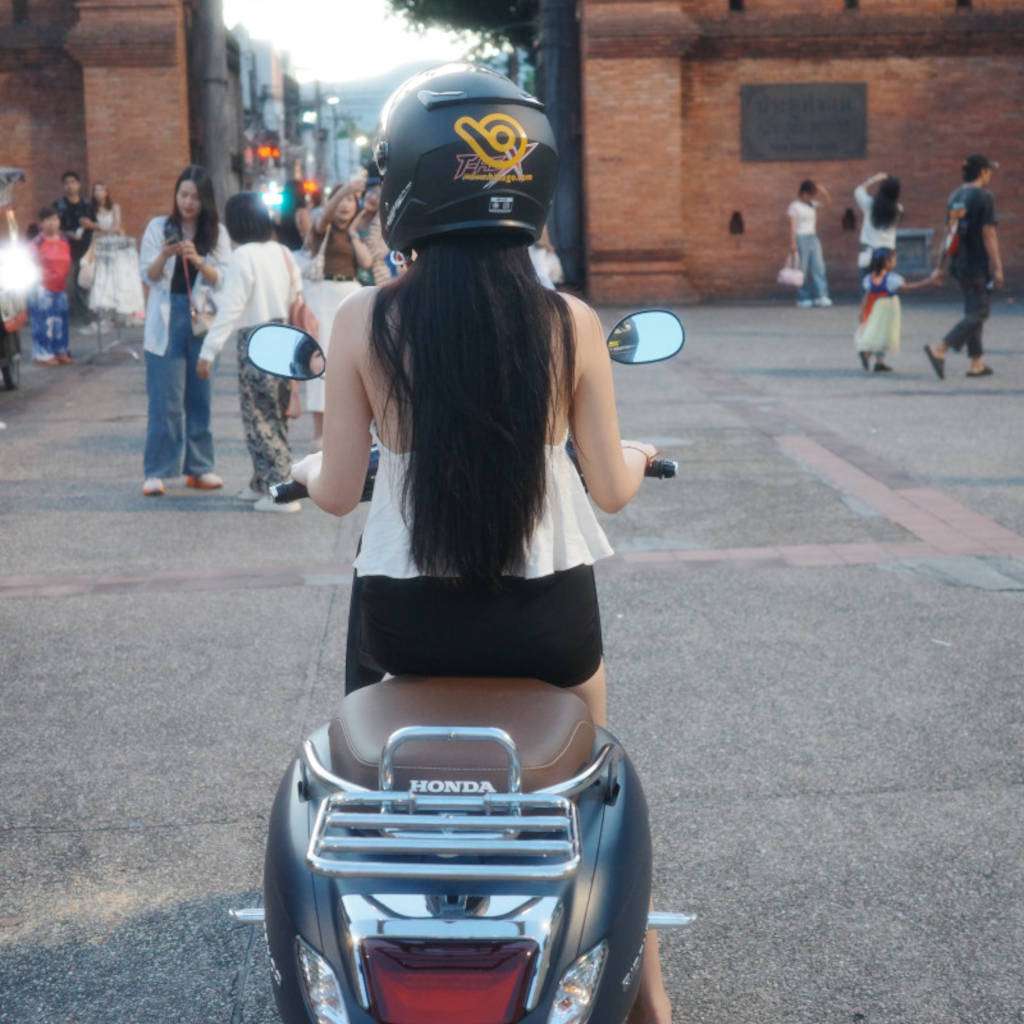
The Safe Start Strategy
If this is your first time on a scooter in Thailand, your goal isn’t to look like a mountain explorer. Your goal is to keep the bike upright in slow-moving traffic. Choose the Honda Scoopy (110cc) or Yamaha Fazzio (125cc).
These bikes are the light, manageable “Classroom Bikes” of Chiang Mai. They have lower seat heights, allow you to put both feet flat on the ground, and don’t have the sudden, jerking throttle response of larger machines. Start small, stay in the city for the first 48 hours, and only head to the hills once your low-speed turns feel calm.
Why these bikes work for beginners
The biggest risk for a beginner isn’t speed—it’s losing balance at a stop or during a slow turn. This is why weight and seat height are the two most important technical specs in your first rental contract.
| FEATURE | Honda Scoopy 110 | Yamaha Fazzio 125 | Honda Click 125i |
|---|---|---|---|
| Weight | 95 kg (Lightest) | 95 kg | 112 kg |
| Seat Height | 746 mm (Lowest) | 750 mm | 769 mm |
| Beginner Benefit | Easiest to catch | Smooth power | Narrow profile |
The “Flat Foot” Test
As a beginner, you should be able to sit on the scooter and put both feet completely flat on the ground. This provides “low-speed confidence.” If you are on your tiptoes, every stoplight becomes a moment of instability.
Avoiding “The Tip”
Most beginner accidents happen at less than 5 kph. When you come to a stop and the bike leans slightly, a 95kg Scoopy is easy to pull back. A 133kg ADV 160 can easily pull you down with it.
City Riding Confidence
For a full breakdown of every bike in this class — engine specs, seat height, storage, and real-world handling — read the dedicated class guide.
Read this before you rent
A clear list of decisions before you sign—daylight riding, solo-first rules, and what to expect at the counter.
LICENSE AND IDPDon’t guess on the law. Understand what police checkpoints require and what your insurance actually covers.
BIKE INSPECTIONHow to check tire tread, brake feel, and document existing damage before you leave the shop lot.
The Beginner’s Gear Checklist
The free helmet provided by the rental shop is usually a plastic “shell” that provides almost zero protection for your face or jaw. As a beginner, you are at higher risk of a low-speed slide. Wear the right gear from hour one.
| Item | Requirement | Why |
|---|---|---|
| Helmet | Full-face (City) Full-face or Modular (Touring) | City: shields face in traffic dust. Touring: required for highway bugs and debris. |
| Shoes | Closed-toe (Sneakers) | Never ride in flip-flops. You need to be able to put your feet down firmly. |
| Clothing | Long pants / Sleeves | Protects against “road rash” in a minor slide and prevents sunburn. |
| Gloves | Lightweight mesh | Your hands are the first thing to hit the ground. Mesh stays cool. |
Nobody cares what you look like on a scooter. Don’t rent a vintage Vespa or a massive 300cc cruiser for your first day. Rent a Scoopy, learn how to brake without panicking, and upgrade the bike later once the muscle memory sets in.
Safe Starter Routes
The Old City Loop
Slow traffic, lots of stops, and an easy grid layout to build your intersection confidence before hitting the faster ring roads.
Huay Tung Tao Lake
A straight, flat road (Route 121) leading to a quiet circular lake road with almost no heavy traffic.
Royal Park Rajapruek
Good wide roads with very little traffic around the park area. It’s the perfect place to practice your sweeping turns without pressure.
"Specs help, but condition matters more. Before you head to the hills, check the tires, squeeze the brakes, and make sure the bike feels manageable at a stop. Safety in Chiang Mai isn't found in a brochure."
By Kai Mercer · Updated April 26, 2026